The Great AI Recalibration: Tech Sell-Offs, Central Bank Divergence, and the Shift to Safety
Global markets face an AI reality check on Dec 18, 2025. Explore why Nvidia and Oracle fell, the Bank of England’s rate cut, and why gold is hitting record highs.
 Favour Oluoma Solomon
The global financial landscape shifted beneath investors' feet today as a perfect storm of valuation skepticism, monetary policy shifts, and geopolitical tension triggered a widespread market retreat. The promise of Artificial Intelligence (AI) acted as a rising tide, lifting all boats. That tide appears to be ebbing, leaving investors to grapple with a fundamental question: When will the trillions of dollars in AI infrastructure spending finally hit the bottom line?
The volatility saw major indices in the U.S., Europe, and Asia enter a "risk-off" phase. While the headlines focus on the numbers, the underlying story is one of a market maturing, moving away from the euphoria of potential and toward the cold, hard scrutiny of profitability.
The End of the AI Honeymoon: Why Capex is the New Catchphrase
For months, the narrative surrounding companies like Nvidia and Oracle was one of unhindered growth. Every earnings report that mentioned "AI scaling" was met with a surge in share price. But today, the tone changed. The market’s focus has shifted from the ability to build AI to the justification for doing so.
The catalyst for today’s tech sell-off was a growing anxiety regarding capital expenditure (capex). Large-scale enterprises have been spending at a historic clip to secure the chips and data center capacity needed to train Large Language Models (LLMs). However, a series of reports suggesting a slowdown in enterprise AI adoption, combined with Oracle’s recent struggle to maintain a massive $10 billion data center partnership, has sent ripples of fear through the sector.
Nvidia, the undisputed poster child of the AI era, saw its valuation take a hit as analysts questioned whether the "second wave" of AI demand for software and services is moving fast enough to replace the initial "hardware rush." If companies are buying chips but failing to launch profitable AI products, the demand for those chips will inevitably crater. This realization led to a cascade of selling that began in New York and swept through the Tokyo and Seoul markets overnight.
A Tale of Two Central Banks: BoE Cuts While the ECB Holds
Adding to the complexity of the day’s trading was a stark divergence in global monetary policy. Central banks are no longer moving in lockstep, creating a fragmented environment for currency and bond traders.
The Bank of England’s Festive Pivot
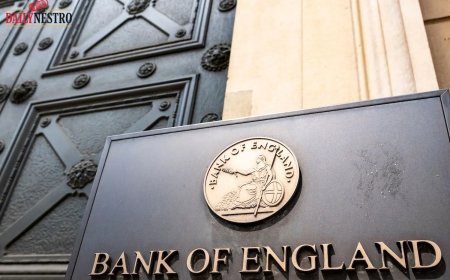
In a move that surprised some hawks but delighted mortgage holders, the Bank of England (BoE) announced a 25-basis-point cut, bringing the base rate down to 3.75%. The decision was not unanimous, passing with a narrow 5-4 vote. Governor Andrew Bailey noted that while inflation hasn't been completely defeated, the trajectory is stable enough to offer the UK economy some breathing room.
This cut provided a brief moment of support for the FTSE 100, particularly in the housing and retail sectors. However, the optimism was capped by the broader global tech rout, as UK-based tech firms were pulled down by the gravity of their U.S. counterparts.
The ECB’s Wall of Resistance
Across the English Channel, the mood was decidedly more conservative. The European Central Bank (ECB), led by Christine Lagarde, opted to hold its deposit rate steady at 2.0%. Despite calls from some Southern European nations for a cut to stimulate growth, the ECB remains haunted by the ghost of persistent services inflation.
The Flight to Hard Assets: Gold and Silver as the Ultimate Hedge
Whenever tech valuations tremble and central banks disagree, investors look for a "safe harbor." Today, that harbor is built of precious metals.
The sell-off in equities triggered a massive rotation into safe-haven assets. Gold reached a psychological milestone, trading near $4,350 per ounce. This rally is being fueled by two primary drivers:
-
Currency Devaluation Concerns: As the BoE cuts and other banks prepare to follow, the fear of fiat currency weakness is driving long-term institutional buyers toward gold.
-
Geopolitical Risk: Persistent macro risks, including trade tensions and the ongoing energy transitions, make the "zero-yield" of gold look attractive compared to the "negative-yield" of a volatile stock portfolio.
Even more impressive was the performance of Silver, which surged past $65 per ounce. Silver is currently benefiting from a unique "double-play" scenario: it is being bought as a safe-haven asset, but it also remains an essential industrial component in the very AI infrastructure and solar grids that the market is still fundamentally committed to building over the next decade.
Global Contagion: Asia and Europe Feel the Heat
The "AI jitters" were not an isolated American phenomenon. The risk-off mood spread rapidly to Asian markets, particularly South Korea’s KOSPI and Taiwan’s TWSE. These markets are heavily dependent on the semiconductor supply chain. When Nvidia or Apple sneezes, the Asian tech hubs catch a cold.
In Europe, the DAX and CAC 40 were caught between the hammer of high interest rates and the anvil of falling tech demand. While the energy sector provided some support bolstered by rising crude prices and seasonal demand it wasn't enough to offset the losses in the industrial and technology sectors.
As we move toward the end of the year, the market's focus will likely remain on three key pillars:
-
Earnings Quality: The next round of corporate earnings will be the most scrutinized in a decade. Investors will be looking for specific line items showing "AI-attributed revenue" rather than just "AI-related expenditure."
-
The Inflation Endgame: If the Bank of England’s cut proves premature and inflation spikes again, expect a violent reversal in the bond markets.
-
The Energy Sector Rotation: If tech continues to stall, look for capital to flow into "old economy" stocks in energy, materials, and utilities, which offer dividends and tangible assets in an uncertain world.
These events serve as a reminder that markets are cyclical. The irrational exuberance of the AI boom is currently being tested by the rational demands of fiscal responsibility. While the long-term potential of AI remains transformational, the path to that future is proving to be far more volatile than many anticipated. For the savvy investor, this "recalibration" is not a sign of a market collapse but a necessary correction that separates the visionary companies from the merely opportunistic.