Wall Street Futures Keep Investors on Edge as Geopolitics and Fed Signals Collide
Wall Street futures edge higher as investors weigh Fed rate-cut expectations for 2026 against geopolitical tensions and rising oil prices impacting global markets.
 Favour Oluoma Solomon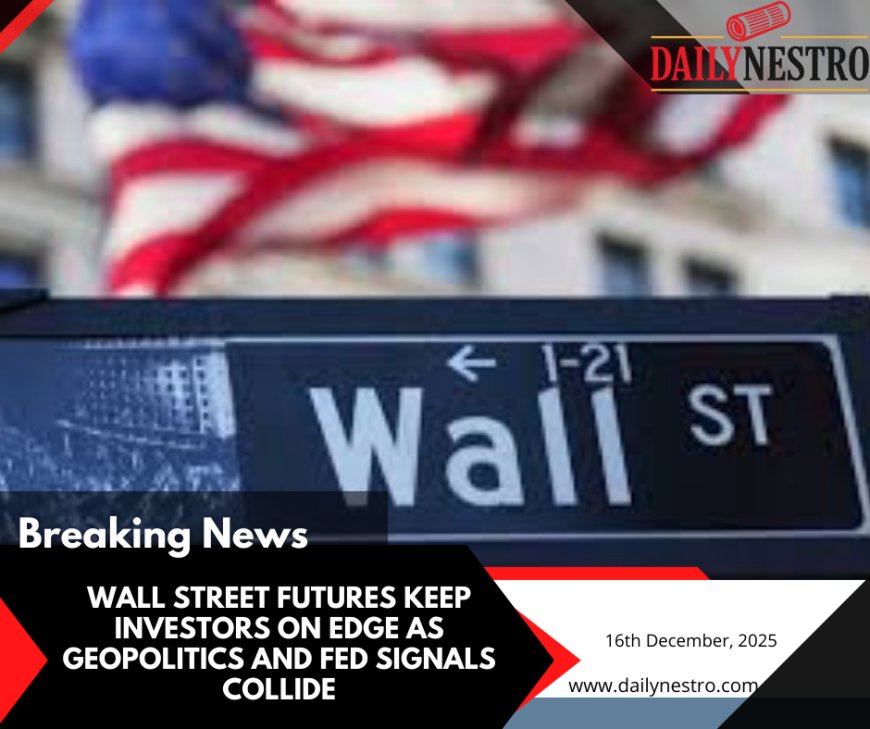
U.S. stock index futures edged higher this week, offering a cautious sense of stability as investors digested fresh economic data and closely monitored signals from the Federal Reserve. However, beneath the modest gains lies a market still gripped by uncertainty, shaped by geopolitical tensions, inflation risks, and shifting expectations around interest rates heading into 2026.
According to market data, futures tied to major U.S. indices moved slightly upward as traders positioned themselves ahead of key macroeconomic releases and upcoming Fed commentary. While optimism around potential rate cuts has provided some support, it has not been enough to erase broader concerns weighing on global markets.
Federal Reserve Signals Take Center Stage
At the heart of investor attention is the Federal Reserve’s policy outlook. After an extended period of aggressive tightening aimed at curbing inflation, markets are increasingly speculating about when, not if, interest rate cuts could arrive in 2026.
Recent economic indicators have sent mixed signals. On one hand, inflation has shown signs of moderation, fueling hopes that monetary conditions could ease. On the other, labor market resilience and sticky service-sector prices continue to complicate the Fed’s decision-making process.
For investors, this creates a delicate balancing act. Expectations of lower rates tend to support equity valuations, especially in growth-sensitive sectors like technology and consumer discretionary stocks. However, premature optimism could quickly unwind if inflation or employment data surprise to the upside.
Geopolitical Risks Add Fuel to Market Volatility
Beyond monetary policy, geopolitical developments are playing an increasingly influential role in shaping market sentiment. One of the most closely watched flashpoints is the reported U.S. blockade of Venezuelan oil tankers, a move that has heightened concerns about global energy supply disruptions.
Oil prices have responded by remaining elevated, adding another layer of complexity to the inflation outlook. Higher energy costs not only affect consumer prices but also squeeze corporate margins, particularly in energy-intensive industries.
Geopolitical tensions of this nature tend to amplify volatility across asset classes. Equity markets, commodities, and currencies all become more sensitive to headlines, making short-term market moves harder to predict.
Sectoral Shifts Reflect Investor Caution
The current environment has triggered noticeable rotations within U.S. equity markets. Energy stocks have benefited from firm oil prices, while banking shares remain sensitive to interest-rate expectations and yield-curve dynamics.
Healthcare stocks, often viewed as defensive plays, have also attracted attention as investors seek stability amid macro uncertainty. These sectoral shifts highlight a broader trend: investors are not exiting markets entirely but are becoming more selective in where they deploy capital.
Rather than a broad-based rally, markets are showing signs of fragmentation, with performance increasingly driven by sector-specific fundamentals and macro exposure.
Inflation and Labor Market Data Remain Key Wildcards
While markets are looking ahead to 2026 rate cuts, inflation and labor market data remain critical near-term risks. Any resurgence in price pressures, particularly from energy or wages, could force the Fed to maintain a restrictive stance longer than expected.
Similarly, signs of overheating in the labor market could reinforce the argument for higher-for-longer interest rates. Conversely, evidence of cooling employment conditions may strengthen the case for easing monetary policy.
This uncertainty helps explain why Wall Street futures are moving cautiously rather than decisively. Investors are waiting for confirmation before committing to stronger directional bets.
Why This Matters for Global Markets
U.S. market sentiment rarely stays contained within American borders. Wall Street’s cautious tone has ripple effects across global equities, emerging markets, and capital flows.
Elevated oil prices can pressure import-dependent economies, while expectations around U.S. interest rates influence currency valuations and debt servicing costs worldwide. For global investors, understanding the interplay between Fed policy, geopolitics, and sector performance is increasingly essential.
As 2025 draws to a close, markets appear to be transitioning from a phase of aggressive repricing to one of recalibration, weighing optimism about future rate cuts against persistent structural risks.
Wall Street futures reflect a market on edge rather than in retreat. Investors are not panicking, but neither are they complacent. With key economic data, central bank signals, and geopolitical developments still unfolding, volatility is likely to remain a defining feature of the market landscape.
The months ahead will test whether optimism around 2026 policy easing can outweigh inflation risks and global tensions or whether caution will continue to dominate investor behavior.