U.S. Federal Reserve Cuts Interest Rates to Three-Year Low
The U.S. Federal Reserve cut interest rates to 3.50–3.75%, the lowest level in nearly three years, in its December 2025 meeting. Learn how this third consecutive rate cut impacts global markets, borrowing costs, investment flows, and economic outlooks.
 Favour Oluoma Solomon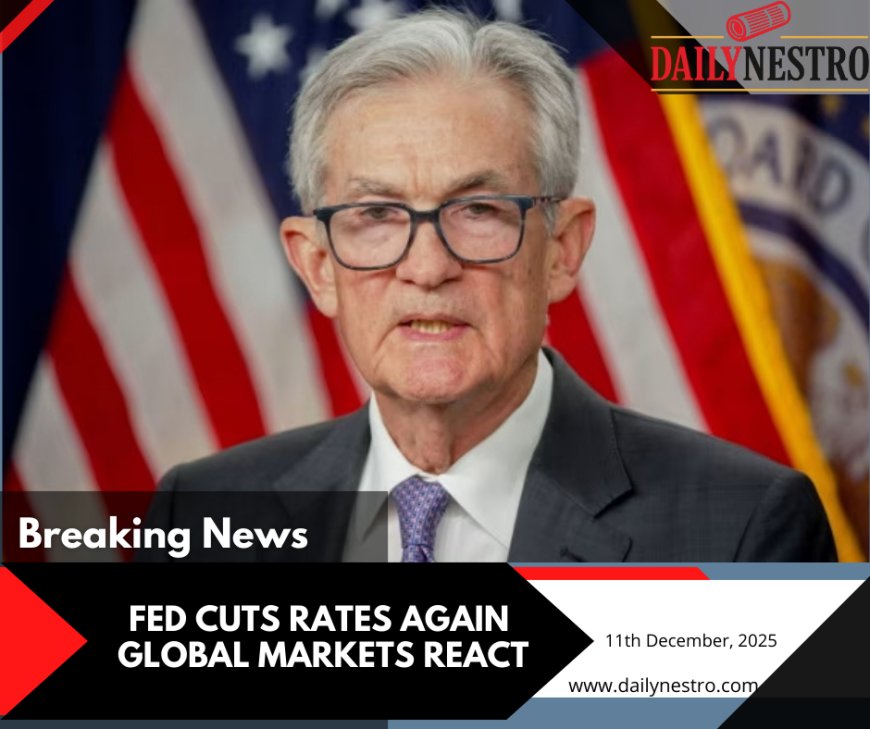
In a widely watched move that reverberated across financial markets, the U.S. Federal Reserve has cut its benchmark interest rate for the third time in 2025, lowering the federal funds rate to a 3.50%–3.75% range, the lowest level in nearly three years. The decision at the Federal Open Market Committee (FOMC) meeting on 10th December 2025 reflects shifting economic conditions and growing concerns about the U.S. labor market and inflation dynamics.
This rate adjustment marks a pivotal shift in U.S. monetary policy. It carries far-reaching implications for global markets, investment flows, borrowing costs, currency valuations, and risk asset pricing factors that businesses, investors, and governments worldwide will closely monitor.
Why the Fed Cut Rates Again
The Federal Reserve’s decision was driven by a combination of macroeconomic signals:
1. Slowing Job Growth and Elevated Inflation
Despite some economic expansion, recent data suggest that U.S. job growth has softened and inflation remains above the Fed’s 2% target. Officials have described the outlook as uncertain, balancing their dual mandate of controlling prices while supporting employment.
2. Ongoing Economic Risks
Concerns about cooling consumer demand and subdued business investment have encouraged the Fed to provide additional monetary support. The rate cut reflects caution over potential economic downturns or weaker growth in 2026.
3. Internal Hawks vs. Doves
The policy decision was not unanimous. Three of the twelve FOMC members dissented, some advocating for larger cuts, others for no change, highlighting growing internal disagreement about the extent of monetary easing.
What the Cut Means for the U.S. Economy
Lower Borrowing Costs
By reducing the federal funds rate, borrowing becomes cheaper for consumers and businesses. That can lead to:
- Lower mortgage, auto loan, and business credit rates
- Increased household spending
- Lower costs of capital for corporations
However, some consumer loan rates, such as for credit cards or auto lending, may not fall immediately due to ongoing market conditions.
A Boost to Investment and Spending: Rate cuts typically encourage businesses to invest more in expansion, technology, and hiring, potentially supporting a rebound in productivity and growth moving into 2026.
Mixed Impact on Savings: While borrowers benefit from lower rates, savers may earn less on traditional savings accounts and certificates of deposit (CDs), which usually adjust more slowly in response to policy shifts.
Global Financial Market Reaction
Equity Markets Rally
Following the rate decision, major U.S. stock indexes reacted positively: the Dow Jones Industrial Average surged nearly 500 points, and the S&P 500 closed near multi-month highs, buoyed by hopes of a year-end rally and improved liquidity conditions.
Yield and Currency Effects
Lower interest rates typically lead to falling yields on U.S. Treasury securities, which can reduce the appeal of dollar-denominated assets. A softer dollar often encourages capital flows into riskier or higher-yielding assets and emerging-market currencies.
Global Policy Spillovers
Other major central banks, especially those with currency pegs to the U.S. dollar, may adjust their own monetary strategies in response to U.S. rate changes, affecting global capital and trade flows.
Implications for Businesses and Investors Worldwide
1. Corporate Finance and Debt Markets
Lower U.S. rates ease borrowing costs for multinational companies with dollar-denominated debt, potentially supporting share buybacks, mergers and acquisitions (M&A), and capital expenditures.
2. Emerging Market Dynamics
Emerging markets often face capital flow shifts when U.S. monetary policy loosens. Investors may seek higher yields in frontier markets, but currency volatility and political risk can add complexity to investing decisions.
3. Commodity Prices
A weaker U.S. dollar tends to support commodities priced in dollars — including oil and metals — potentially lifting prices and benefiting exporting nations. Commodities also draw interest as inflation hedges in easing cycles.
4. Digital Assets and Risk Assets
Lower rates can increase liquidity and speculative flows into risk assets like equities and certain digital assets. However, inconsistent policy messaging and economic uncertainty could temper risk appetite.
Is This the Start of a Broader Easing Cycle?
Analysts suggest this rate cut may represent the beginning of a more accommodative monetary cycle heading into 2026. While the Fed has signaled only one additional cut next year, markets have priced in expectations for further easing should economic headwinds persist.
The decision could influence other central banks, including the European Central Bank, the Bank of Japan, and several emerging-market authorities, as they calibrate policy to support growth and manage inflation.
The Federal Reserve’s decision to cut interest rates for the third time in 2025, lowering the federal funds rate to its lowest level in almost three years, is a major event in global monetary policy. This shift reflects economic uncertainty, a cautious approach to inflation and employment mandates, and a focus on stabilizing growth. As businesses, investors, and policymakers digest this change, the rate cut’s ripple effects are likely to influence markets and economies well into 2026.